My eyes stayed fixed on the long, undeveloped stretch of road ahead as my mind raced in overdrive. My morning routine had been completely thrown off—my wife had injured her ankle unexpectedly, and everything in our home shifted overnight. But even in the chaos, my thoughts drifted back to the night before.
It was the last Sunday of Thanksgiving break, and my wife had planned a family bonding activity. We spread a plastic tablecloth across the dining room table and opened four hollow PVC teddy bears and several bottles of paint. The goal was simple: mix the colors, pour them over the bears, and watch the paint form swirling patterns as it dripped.
Our five-year-old son, Kam, was bursting with excitement as he painted his bear—affectionately naming it “Teddy”—while simultaneously attempting to boss his little sister, Kenz, as she worked beside their mother. As I sat at the head of the table watching it all unfold, something hit me: I had never experienced anything like this as a child.
My upbringing mirrored my children’s in one way—I was raised in a two-parent household. I was born in February of 1990 in Dallas, Texas, to Janet Rhodes and Alister Fletcher. They met while working in dining services at Southern Methodist University, eventually marrying in 1994. Together, they raised my sister and me to the best of their ability.
But growing up, being in a two-parent household felt rare—almost strange. Many of my friends lived between homes, bouncing between parents. I used to think that was the luxury, until I realized that stability, though imperfect, was its own gift.
My mother was love in motion—nurturer, teacher, healer. Her background as an educator meant that even in hard times, she created moments of learning and joy. Some of my fondest memories are rooted in what she poured into us.
My relationship with my father was more complicated. If I’m being honest, I don’t remember hearing him say “I love you” until after my mother passed in 2019. We lived under the same roof, yet often felt emotionally worlds apart. As I got older, that distance turned into resentment, fueled by years of witnessing infidelity, emotional strain, and relational toxicity between my parents. I made a quiet vow: I will not be this kind of father.
When I left for college and later returned home, that vision became clearer. I wanted to raise children in an environment rooted in emotional safety, expression, and peace. I didn’t want my kids burdened by adult stress—arguments about money, utilities, or survival. I wanted better for them because I had witnessed how heavy those things were.
That’s why that simple paint activity meant so much more than it appeared on the surface. In that moment, I saw the safe space my wife and I have built. I saw the return on the daily sacrifices—the long days, the pressure, the responsibility. I saw my children free to be children. I saw my wife free to be soft.
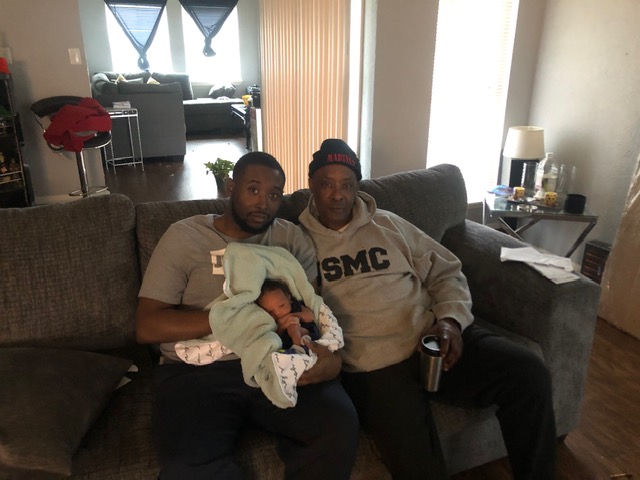
And I realized something else: while my father lacked in many emotional areas, he excelled in provision. It took me losing him to fully understand that. Rain, sleet, or snow—he worked multiple jobs to ensure we had what we needed. Even if he never sat at a table painting teddy bears in a suburban dining room, he modeled what survival looked like when options felt limited.
Black fatherhood is often misunderstood—reduced to absence instead of endurance, to failure instead of resilience. My story carries both wounds and gratitude. I am who I am because of what I lacked and what I received. And every time I sit at that table with my children, I am not just creating memories—I am actively rewriting a legacy.
 The Resilient Black Man